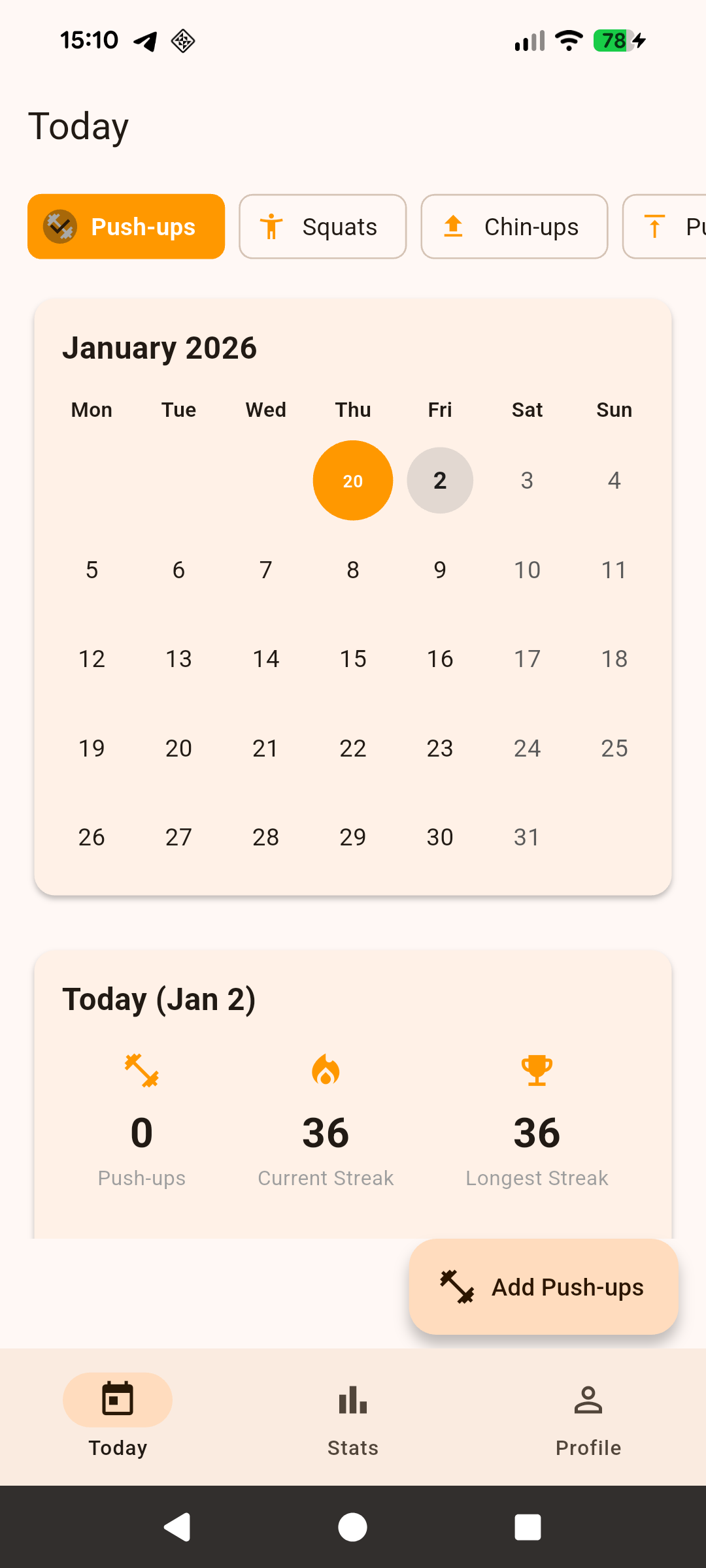
Chin-ups are the bodyweight bicep builder. Log every rep in 2 seconds. Watch the streak grow. The free chin-up app that makes consistency feel like a win.

A chin-up is a vertical pulling exercise with an underhand (supinated) grip: hang from a bar with palms facing you, hands shoulder-width or narrower, then pull your chin over the bar. Slightly easier than a pull-up for most people because the biceps contribute more — but no less effective for building the back.
Because the biceps contribute heavily with the supinated grip, most people can do a chin-up months before their first strict pull-up. That makes chin-ups the perfect daily target — easier to log, easier to build a streak around, and the most efficient way to build the bicep-back combo.
Biceps grow with frequent stretched-position work. The chin-up takes the bicep through a longer range than any dumbbell curl. Daily chin-ups, even at low volume, accumulate the kind of weekly volume that beats a once-a-week 'arm day' at the gym.
Most people quit chin-ups when soreness arrives. The streak format forces a daily decision: do at least one — even a negative — to keep the chain alive. That decision compounds into a body that doesn't quit.
Start with dead hangs in supinated grip (30–60 seconds) and negative chin-ups (jump up, lower for 5 seconds). Use a resistance band for assisted reps. Most beginners get their first chin-up in 4–8 weeks of daily practice.
First chin-up unlocked. Goal: 5 strict in a row. Practice with singles or doubles spread through the day. Don't grind to failure — frequency beats intensity here.
Add tempo work (3-second negatives), close-grip chin-ups (knuckles touching), and chest-to-bar variations. Biceps and lats are visibly growing.
Move to weighted chin-ups (vest, dip belt), L-sit chin-ups, archer chin-ups, or one-arm progressions. Bodyweight alone hits a ceiling — add load to keep growing.
Beginners often turn chin-ups into bicep curls — elbows shoot forward and the back disengages. Cue: drive the elbows down and back, like rowing yourself up to the bar. The back leads, the biceps assist.
If you don't let the arms fully extend at the bottom, you're skipping the stretch — the part that builds the most muscle. Every rep starts with elbows straight (or near-straight). Half-range chin-ups build vanity, not strength.
The chin must go over the bar, not stop at the chin-level. If you can't get there, do negatives or band-assisted reps to build the top range — don't shorten the rep to keep the streak going.
Keep wrists straight and neutral, in line with the forearm. Bent wrists transfer tendon stress that can become 'climber's elbow' over months of daily training.
Daily exposure. Build the pattern.
Strict form, chin over bar.
Add a 2-second negative to one rep per set.
Split across day. Streak is automatic now.
Yes — completely free on Android and iOS. No paywall, no premium tier, no subscription. The full app, including chin-up tracking with its own streak and stats, is yours from day one.
Tap the chin-up exercise, enter the reps you just did, and confirm. The whole flow is about 2 seconds. Multiple sets per day sum into your daily total — useful for distributing volume across the day.
Chin-ups use an underhand (supinated) grip — palms facing you. Pull-ups use an overhand (pronated) grip — palms facing away. Chin-ups recruit the biceps more, making them slightly easier and great for arm development. Pull-ups emphasize the lats and rear delts more. StreakUp tracks them as separate exercises.
If you can do 1–3 strict chin-ups, do 3–5 total per day spread as singles or doubles. If you can't yet do one, log negatives or band-assisted reps daily. The streak format is most powerful when the daily commitment is small enough to never skip.
Yes — chin-ups are one of the most effective bicep builders in any training library, because they take the bicep through a long stretched range under bodyweight load. Daily chin-ups at moderate volume (5–15 reps total) build measurable arm size in 8–12 weeks for most beginners and intermediates.
Yes — StreakUp gives each exercise its own independent streak, calendar, and stats. You can run all four simultaneously without one affecting the others. This is the main reason StreakUp exists — generic habit trackers can't separate them.